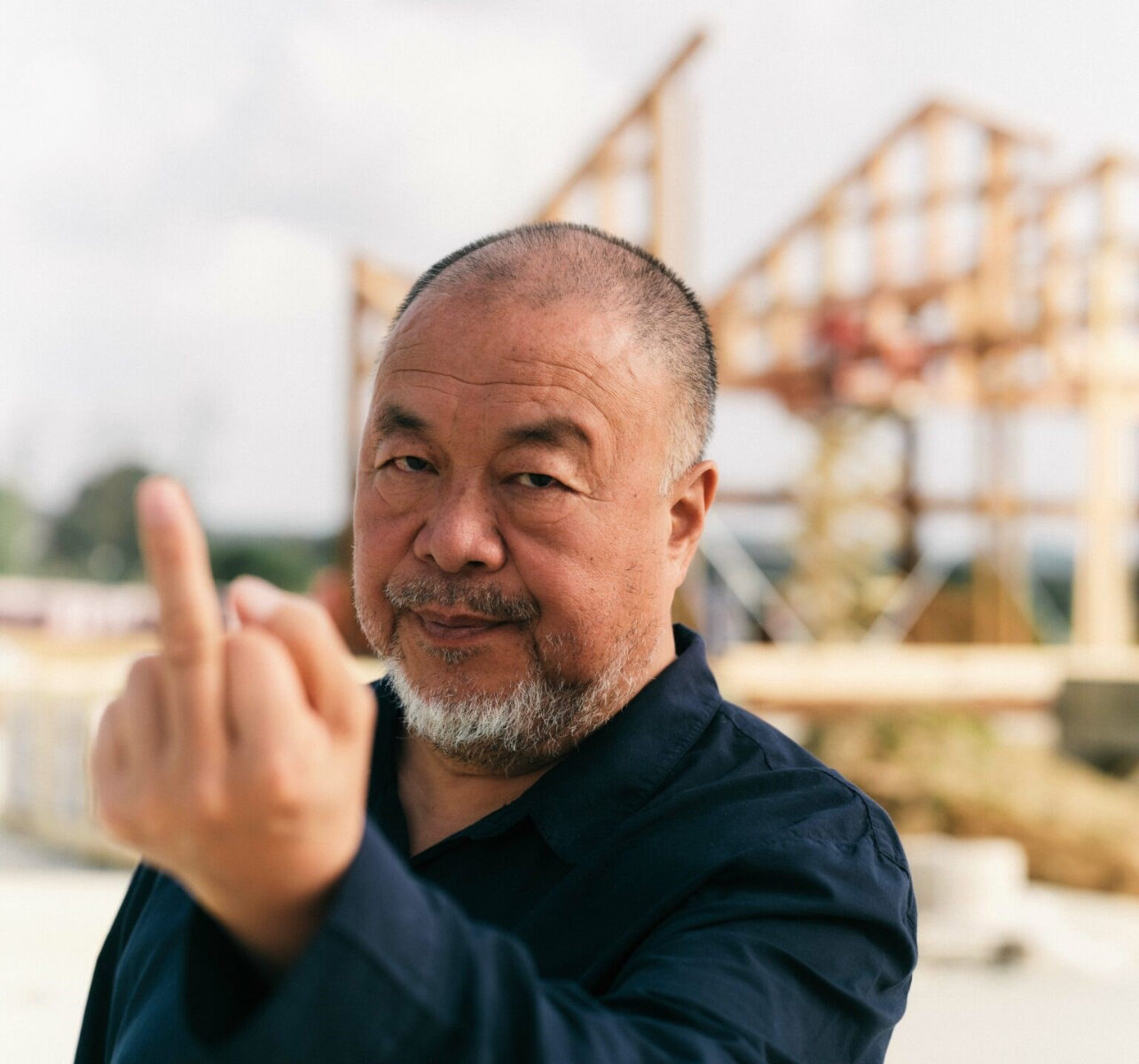
Ai Weiwei (b. 1957) is a Chinese contemporary artist, documentarian , and activist renowned for his powerful and provocative work. He uses a wide range of mediums to challenge authority and explore the relationship between traditional Chinese culture and modern society.
Life and exile
- Born in Beijing, Ai’s childhood was defined by his family’s exile to a labor camp in a remote region of China.
- His father, the poet Ai Qing, had been denounced as an enemy of the revolution. These formative years significantly shaped Ai’s critical views on the Chinese government.
- From 1981 to 1993, Ai lived in New York, where he was heavily influenced by the conceptual art of Marcel Duchamp and the Pop Art of Andy Warhol.
- He later returned to China, but his persistent criticism of the government led to surveillance, censorship, and an 81-day detention in 2011.
- Since being allowed to leave China in 2015, Ai has lived in Europe, including Germany, the UK, and Portugal.
Activism
Ai Weiwei’s activism is central to his art, with notable campaigns and projects including:
- Sichuan earthquake investigation (2008): Following a major earthquake, Ai investigated the shoddy “tofu-dreg” construction of schools that collapsed and led to the deaths of thousands of students. He published the names of the victims online, challenging the government’s official narrative.
- Human Flow (2017): Ai’s documentary film on the global refugee crisis provides an immersive and powerful look at the scale of human migration.
- Political outspokenness: Ai is a vocal advocate for free expression and human rights. His repeated clashes with the Chinese authorities have made him an international symbol of dissent.
Notable artworks and projects
- Sunflower Seeds (2010): For this installation at the Tate Modern, Ai covered the floor of the Turbine Hall with 100 million hand-painted porcelain sunflower seeds, highlighting mass production and the individuality of the Chinese population.
- Dropping a Han Dynasty Urn (1995): A series of photographs that show Ai dropping a 2,000-year-old ceremonial urn. The work provoked debate over the value of artifacts and the destruction of cultural heritage.
- Beijing National Stadium (2008): Ai was a design consultant for the “Bird’s Nest” stadium for the Beijing Olympics but later disavowed the project, publicly boycotting the games over the government’s human rights abuses.
- Forever Bicycles (since 2003): An installation featuring a massive sculpture of bicycles, a former symbol of everyday life in China, stacked into a dazzling three-dimensional structure.
- Straight (2008–2012): Created in response to the Sichuan earthquake, this installation features 90 tons of rebar salvaged from the collapsed schools, meticulously straightened by hand to form a monumental sculpture that resembles tectonic plates.
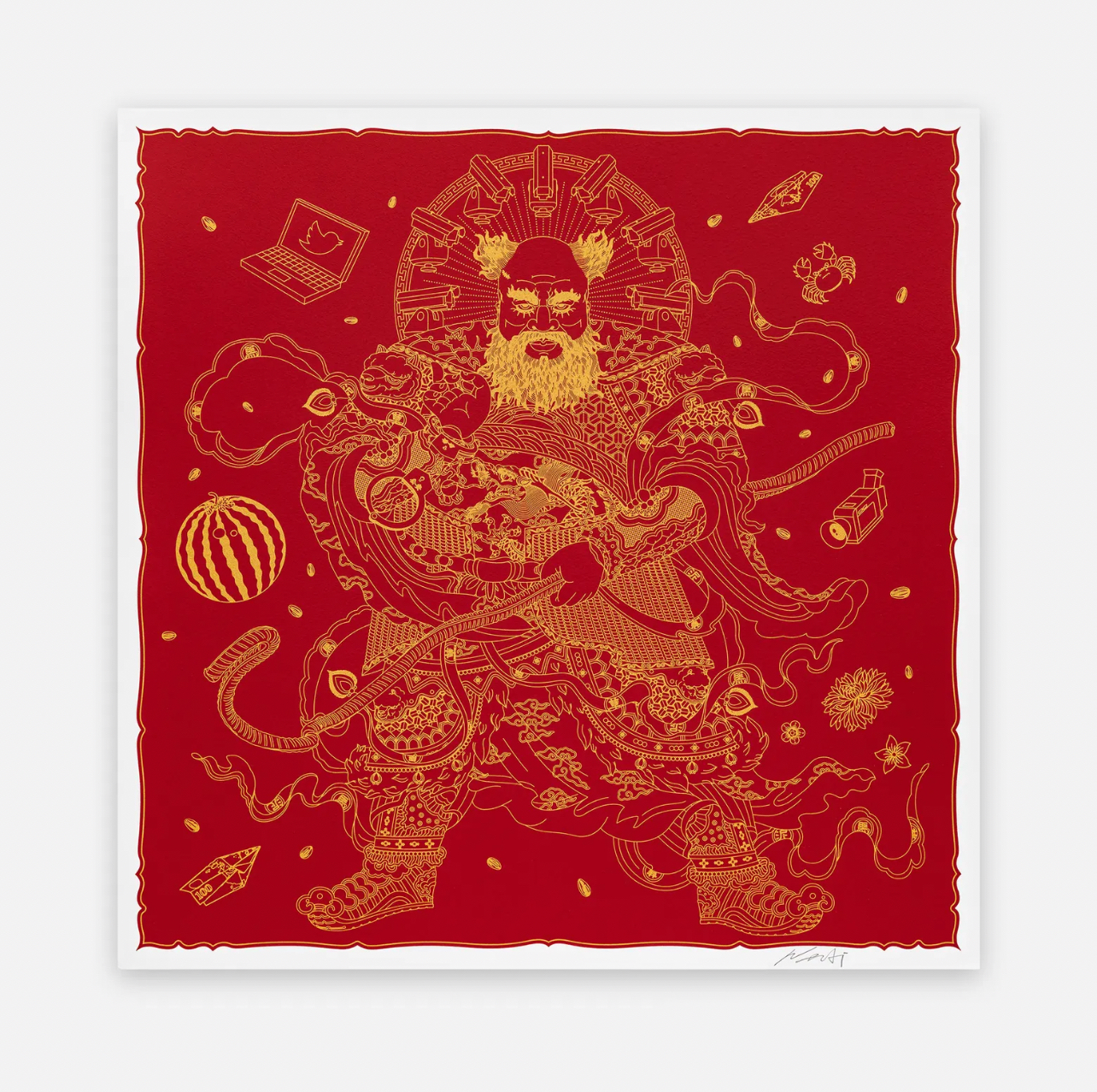
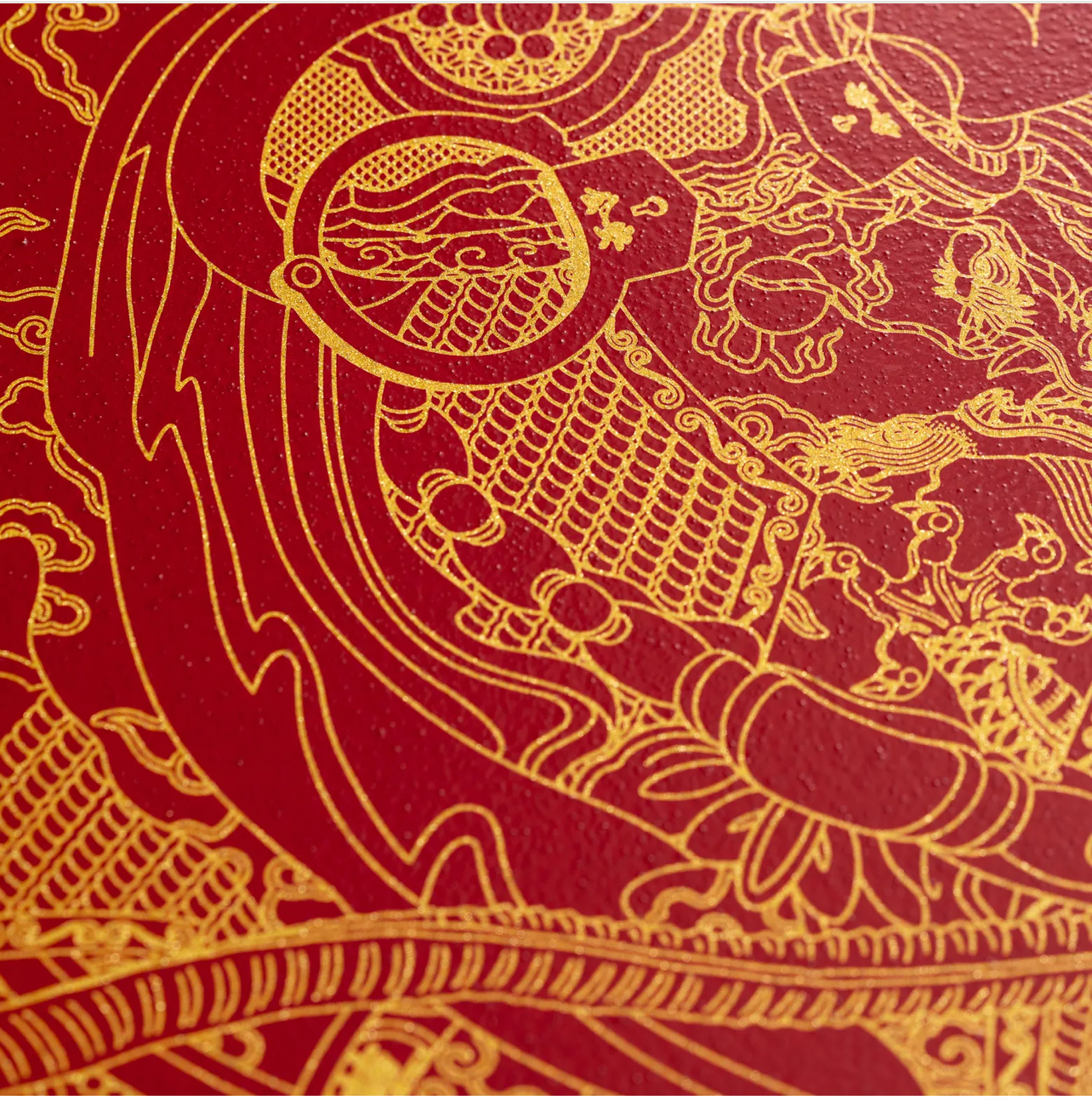
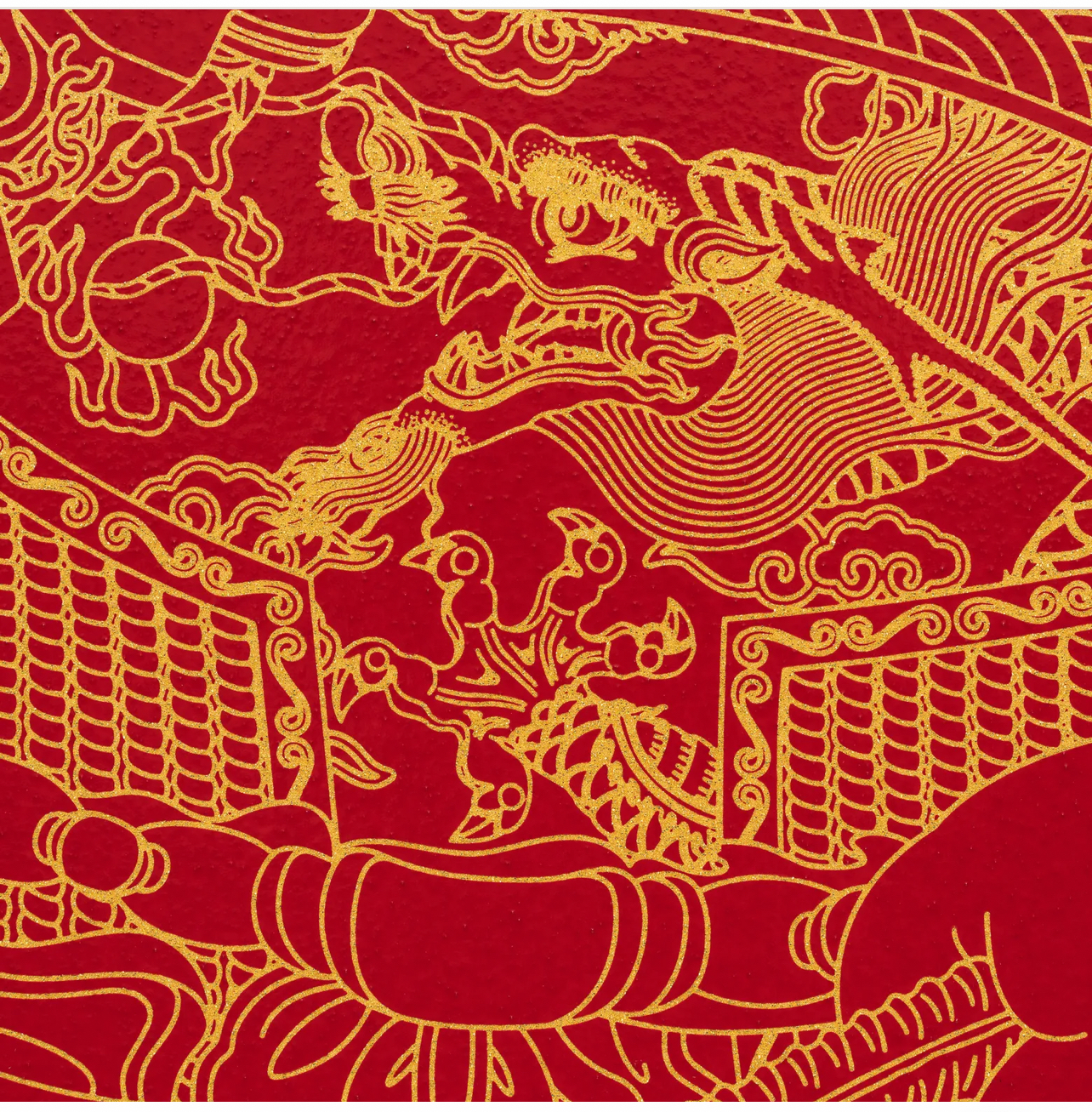
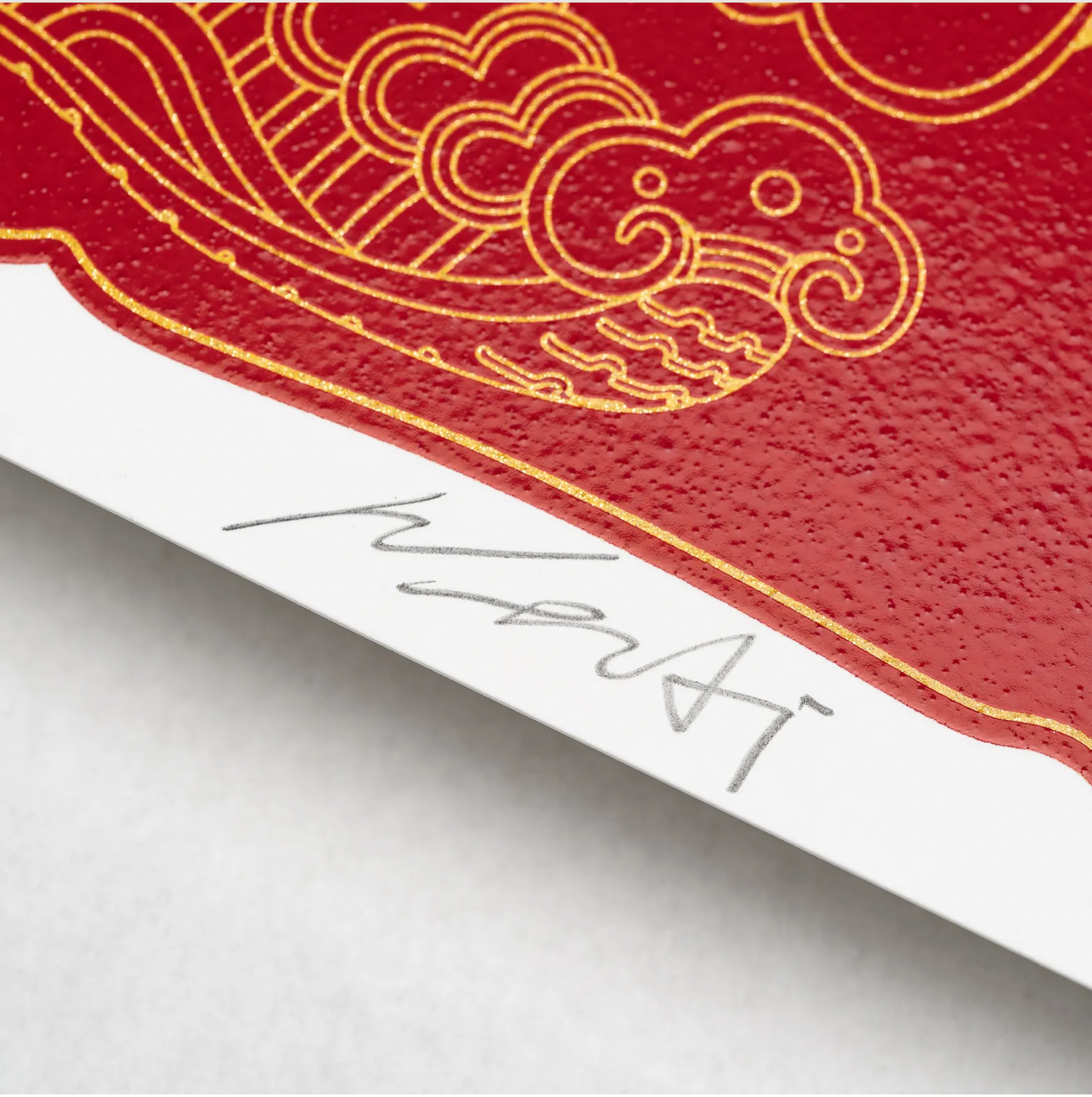
£2950
Ai Weiwei
Guardian
2024
60x60cm
Print – 2 colour silkscreen with a metallic glitter base layer, printed on 410gsm Somerset Tub Sized Radiant White paper
Signed and numbered
Certificate of Authenticity
Original Packaging